


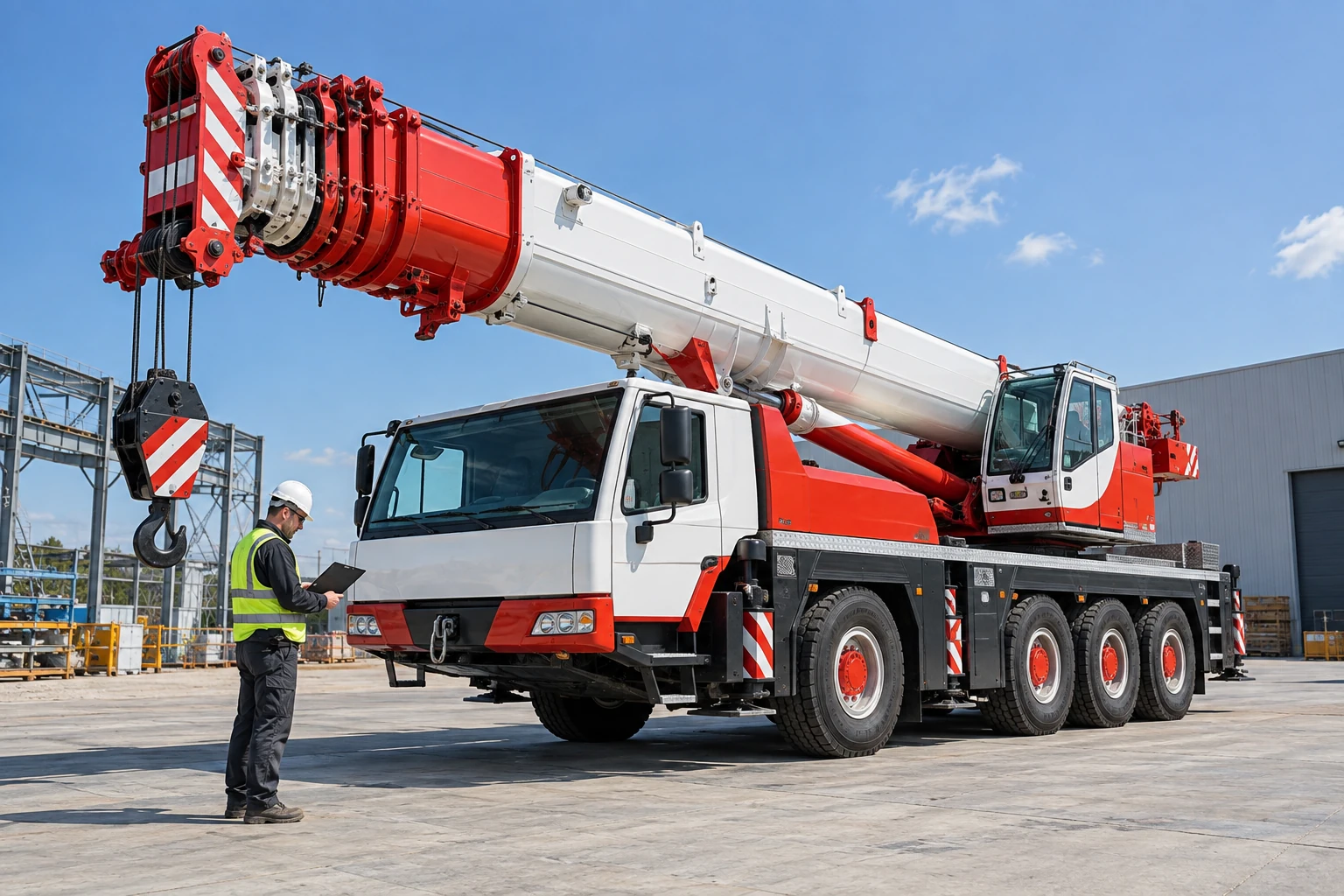
Choosing the Right Mobile Crane: Capacity, Reach and Site Conditions
Choosing a mobile crane involves more than the weight of the load. Working radius, lifting height, ground conditions and the space available for setup must all be considered together. Sound planning is the foundation of a safe, efficient lift.
Define the load accurately
Start by establishing the load’s exact weight, center of gravity and lifting points. The weight of slings, shackles, spreader beams and other lifting accessories must be included in the total. Missing or approximate information can lead to the wrong capacity being selected.
Working radius directly affects capacity
A crane’s maximum rated capacity does not apply at every working distance. Available capacity decreases as the horizontal distance between the crane and the load increases. The pick-up and set-down points, boom angle and required reach must therefore be checked together against the load chart.
Crane capacity should be determined by considering load weight, working radius and boom configuration together.
Review site and ground conditions
The slope and bearing capacity of the setup area, underground utilities and surrounding structures must all be included in the lift plan. Check in advance that there is enough room to deploy the outriggers and use suitable support mats.
- Measure narrow access routes and turning areas.
- Identify power lines and fixed obstacles.
- Assess ground bearing capacity and outrigger loads.
- Check wind and visibility before the operation.
The right equipment improves efficiency
An undersized crane creates a safety risk, while equipment larger than necessary can increase space requirements and costs. Selecting a crane on the basis of a proper site survey reduces setup time, simplifies the operation and helps avoid unplanned stoppages.