


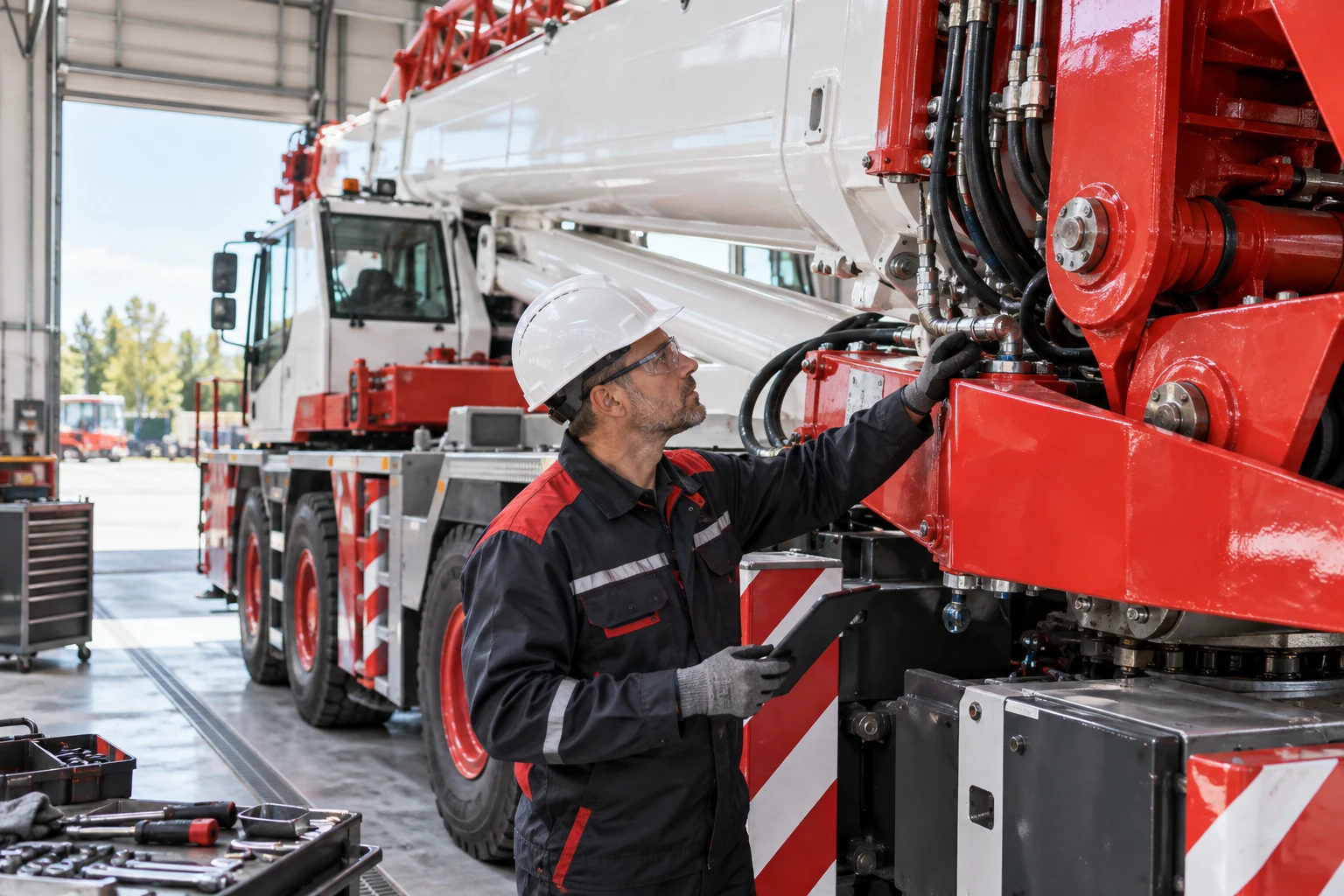
Why Periodic Crane Inspections Are Essential
Cranes are complex machines that work under heavy loads. Regular inspections and planned maintenance help identify wear early, keep equipment operating reliably and prevent unexpected breakdowns from interrupting work.
Inspection and maintenance are not the same
Maintenance covers tasks such as lubrication, adjustment and component replacement to preserve operating performance. Inspection systematically assesses whether components are fit for safe use. The two processes complement each other.
Which components are checked?
The scope depends on the type of equipment, but key inspection points include the load-bearing structure, boom connections, hydraulic system, wire ropes, hook assembly, brakes, limit devices and safety equipment.
- Cracks, deformation and loose connections
- Hydraulic leaks and hose condition
- Condition of wire ropes, hooks and safety latches
- Operation of brakes, alarms and limit devices
- Condition of tires, outriggers and support equipment
Finding minor wear early can prevent a larger failure and unplanned downtime.
Documented follow-up improves operational quality
Recording inspection dates, findings and corrective actions makes an equipment’s history visible. These records help shape maintenance plans and reveal recurring problems.
Do not overlook daily checks
In addition to scheduled periodic inspections, the operator’s pre-shift visual and functional checks are critical. If unusual noises, leaks, warning signals or movements are detected, the equipment should not be used until it has been technically assessed.