


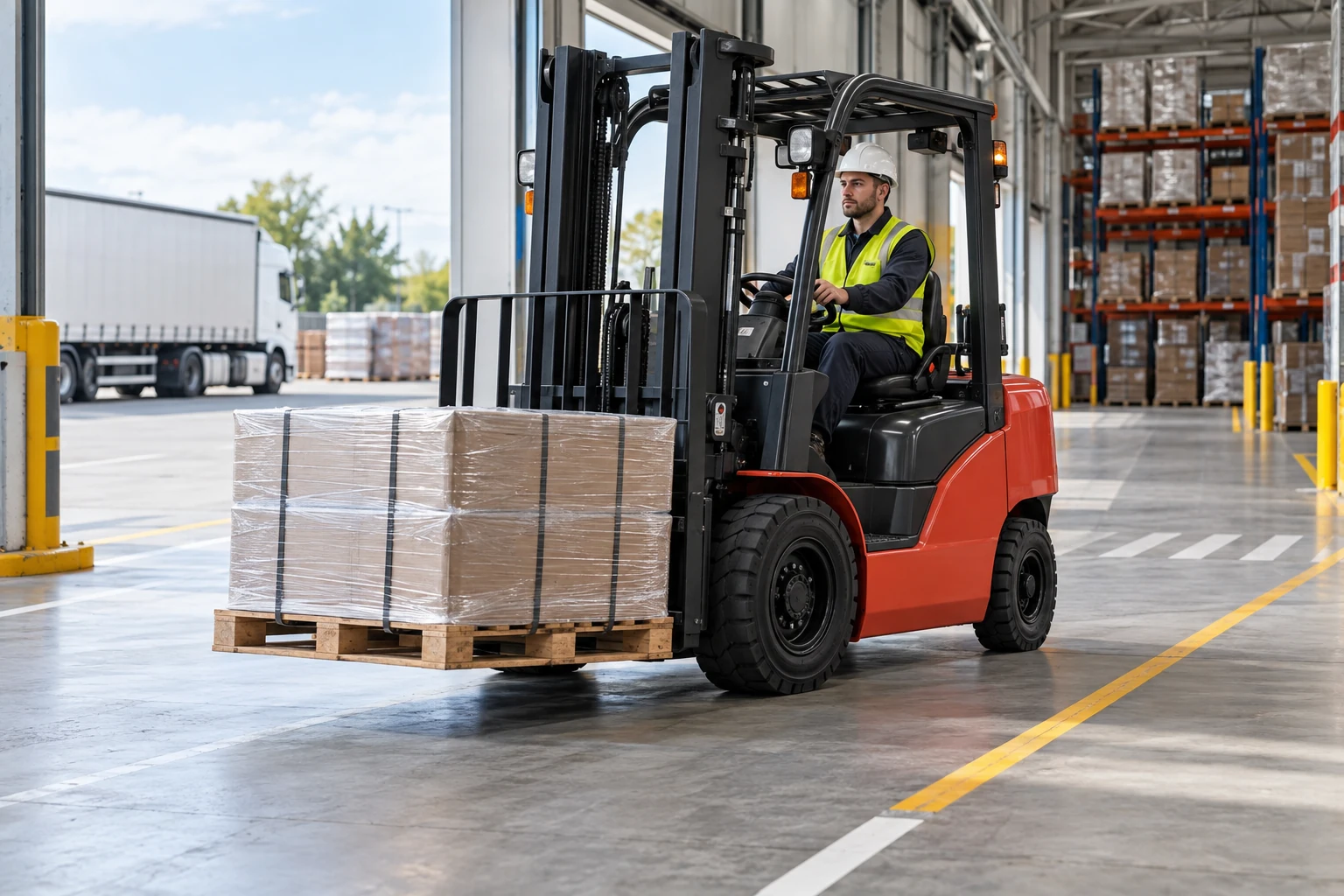
Essential Forklift Safety Rules
Forklifts are among the most frequently used machines in warehouses and production facilities. Sharing confined spaces with people makes speed and maneuvering control especially important. Safety depends on trained operators, regular equipment checks and well-designed traffic routes.
Carry out a pre-shift check
Before starting work, the operator should check the tires, forks, mast, chains, hydraulics, brakes, horn and warning lights. Record any defects and do not use the forklift until it is safe to do so.
Maintain load stability
The load should be balanced on the pallet, the forks should extend sufficiently beneath it, and it should be carried as low as practicable. Never exceed the limits shown on the forklift’s capacity plate.
Sudden turns, hard braking and high speed can seriously destabilize a forklift carrying a raised load.
Separate pedestrian and vehicle routes
Site markings should be clearly visible, and speed should be reduced at blind spots, doorways and warehouse aisles. Keep pedestrian routes separate from forklift routes wherever possible, using audible and visual warnings at crossing points.
- Wear a seat belt.
- Use safe driving procedures when the load obstructs your view.
- Never carry people on the forks.
- Lower the forks and secure the equipment when parking.
Safe behavior requires ongoing attention
One-off training is not enough. Review site rules regularly, analyze near misses and give operators feedback that reflects current working conditions.