


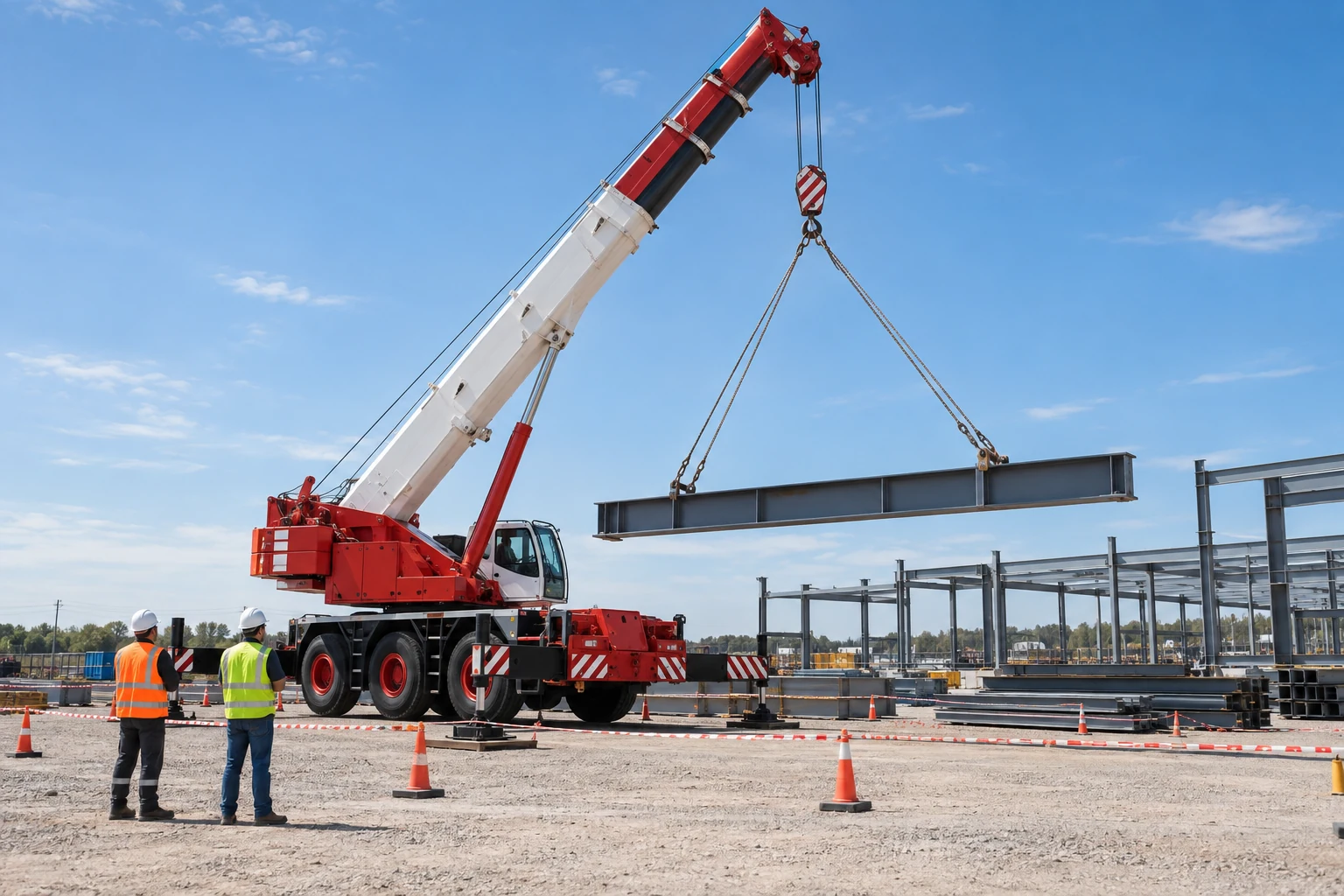
Seven Essential Steps for a Safe Lifting Operation
A successful lifting operation requires more than the right equipment: it also depends on sound planning, clear communication and controlled execution. A structured preparation process reduces uncertainty on site before work begins.
1. Site survey and risk assessment
Inspect the setup area, access routes, ground conditions, nearby buildings and power lines on site. Identify risks that could affect the operation and share the necessary controls with the team.
2. Verify load and equipment details
Confirm the load’s weight, dimensions, center of gravity and lifting points. Choose the crane, slings and auxiliary equipment on the basis of this verified information.
3. Prepare the lift plan
Define the starting and final positions of the load, working radius, boom length, slewing area and sequence of movements. For critical lifts, the team should review the plan together.
Before the operation begins, everyone on the team must understand their responsibilities, the signaling method and who has authority to stop the lift.
4. Set up and inspect
Set up the crane in accordance with the manufacturer’s instructions. Inspect the outriggers, support mats, ropes and safety systems. Do not begin lifting until these checks are complete.
5. Secure the work area
Mark off the lifting area with barriers and prevent unauthorized access. No one should stand beneath a suspended load or in its potential path of travel.
6. Perform a controlled test lift
Raise the load a short distance from the ground to check its balance, connections and the braking system. If anything is amiss, lower it safely and adjust the rigging before continuing.
7. Maintain communication and finish safely
The operator should take instructions only from the designated signaler and stop movement if visual contact is lost. Once the load is in its final position, dismantle the equipment in a controlled manner and hand over the area in a safe condition.